The agent knows who is asking
Not a user ID. The person, with their role, their team, and the matters they are walled off from. An agent retrieving without identity is retrieving on behalf of everybody.
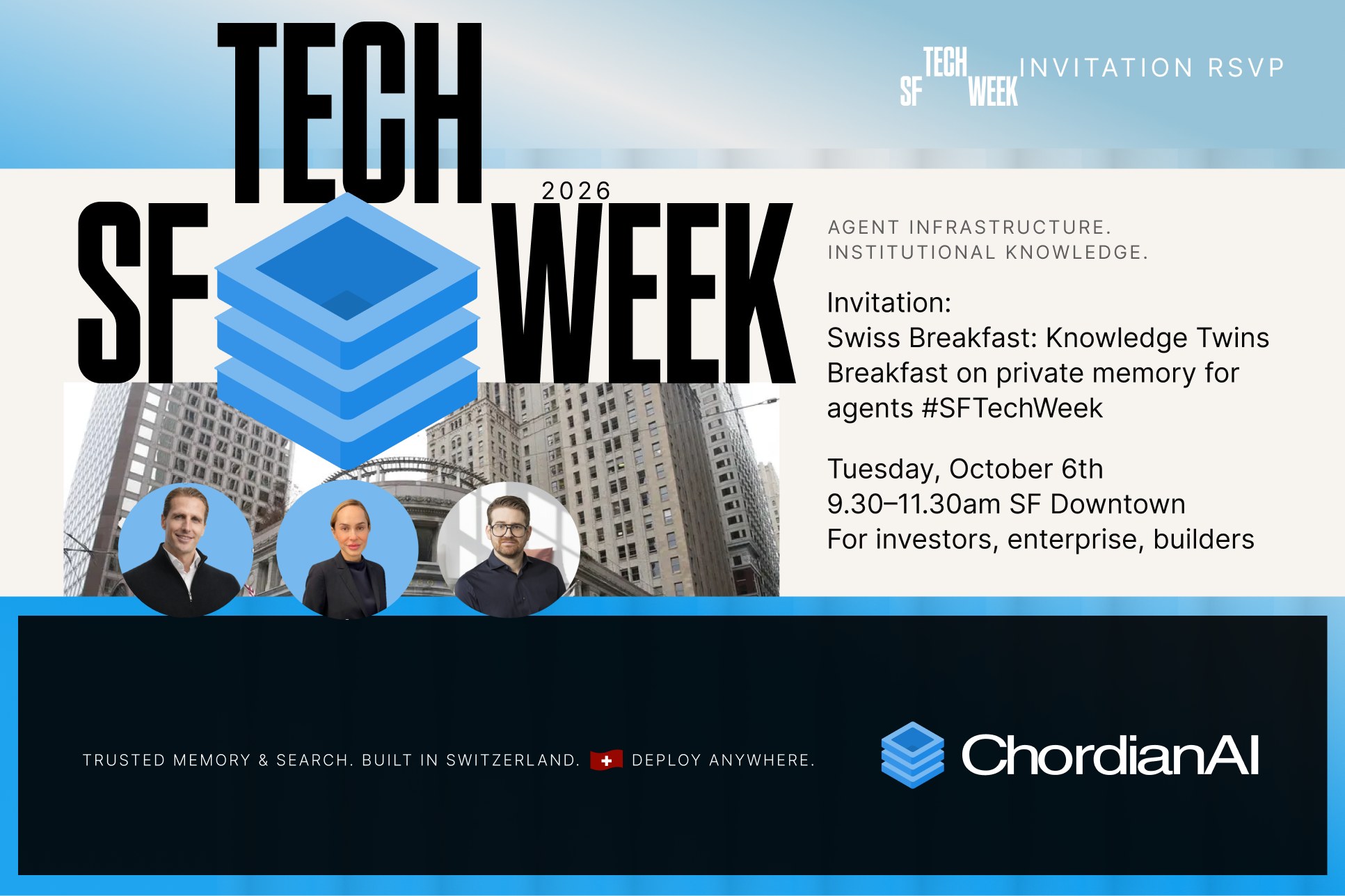
An invitation from the Chordian founding team
A Swiss breakfast on institutional knowledge and agent infrastructure.
Space is limited and requests are reviewed by hand.

Not a demo corpus. The actual thing — client files, deal history, matter correspondence, the pricing nobody outside the team is meant to see.
Most enterprise agent deployments do not stall because the model is weak. They stall in legal review. They stall because nobody can answer which documents the agent is permitted to see. They stall because a pilot that worked beautifully on a clean folder collapsed the moment it touched the real system.
We think trust decomposes into four conditions. Most deployments satisfy one or two. Satisfying all four at once changes the architecture fundamentally, and that is what we came to show you.
Not a user ID. The person, with their role, their team, and the matters they are walled off from. An agent retrieving without identity is retrieving on behalf of everybody.
A firm's knowledge is a set of facts with validity windows. Treat a superseded document as equally true and the agent will be confidently wrong, which is worse than silent.
The retrieval path itself: what it read, what it rejected, how certain it was. In regulated environments the question is not whether the answer is good, but whether you can prove it in eighteen months.
For many institutions that means it never leaves the perimeter — not to us, not to a model provider, not to a region their regulator has not approved. That is an architectural decision, not a policy one.
A Knowledge Twin is a structured representation of how one person works: the entities they deal with, the relationships between them, the sources they rely on, and the judgements they repeatedly apply. An agent operating through a Knowledge Twin inherits that working context, under that person's permissions.
A document store gives an agent material. A Knowledge Twin gives it the working context of the person who would otherwise have done the task — and that context stays with the firm when the person leaves.
Twenty minutes, technical, with a live demonstration. We will show where this holds. We will be equally clear about where it does not yet.
What would it take for you to trust an agent with your own firm's knowledge?
Or, if you have already tried: what broke?
We are a Swiss team, new to San Francisco and serious about being here. Rather than add another evening to a week that already has forty, we wanted to start by doing what we would do at home.
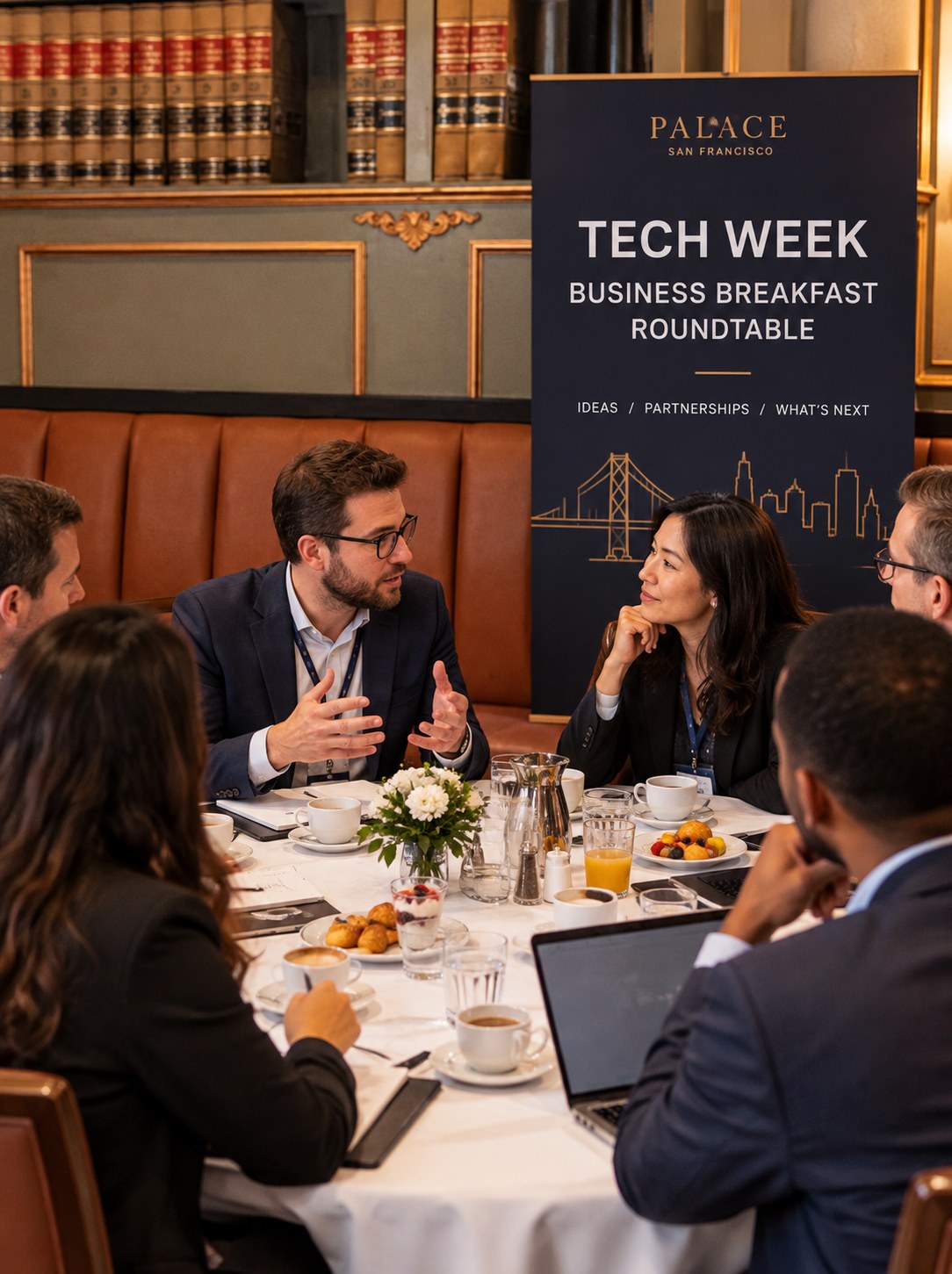
So: a proper breakfast, real coffee, and two hours of conversation before the day gets loud. One talk, and then the part we are actually looking forward to — hearing what has broken for you.
If you have tried to put a company's real knowledge behind an agent and watched it fall over, you are exactly who we would like in the room.
OliverOn behalf of the Chordian founding team
Tuesday 6 October, 09:30. Palace Hotel San Francisco.